Issue #27 - O que a CES 2026 realmente nos revelou (Não se tratava apenas de gadgets)
Olá a todos!
Esta edição vai além de um evento isolado para focar em uma mudança mais ampla que está moldando nossa profissão: a IA está se tornando operacional, as equipes estão cada vez mais híbridas e a liderança centrada no ser humano é o que, em última análise, impulsiona o sucesso dos projetos.
Nas páginas a seguir, reflito sobre a ascensão dos agentes de IA autônomos, a ousada aquisição da Manus pela Meta e a crescente competição nos ecossistemas de IA corporativos, destacada pela integração do Claude ao Microsoft Copilot.
Você também encontrará atualizações sobre a evolução de nossos fundamentos profissionais, incluindo o lançamento da 8ª edição do Guia PMBOK®, além de oportunidades para desenvolver habilidades práticas em IA por meio de masterclasses, certificações e meus cursos no LinkedIn Learning.
Convido você também a participar do O’Reilly GenAI Superstream, onde exploraremos como os fluxos de trabalho orientados por agentes estão passando da teoria à prática.
Ao iniciarmos 2026, este boletim informativo é um convite para focarmos não apenas na velocidade, mas na direção — e na criação de valor duradouro com tecnologia e liderança.
Ricardo
In This Issue
- Why AI, hybrid teams, and human-centered leadership are reshaping how projects succeed
- Meta’s Bold Bet on Autonomous AI Agents with the Manus Acquisition
- Claude Copilot’s Rise Highlights a More Competitive AI Ecosystem
- The PMBOK® Guide 8th Edition is Now Available in Print
- Starting 2026 Together: Masterclass & Certification Promotions
- Get to know my LinkedIn Courses
- Join Me at the O’Reilly GenAI Superstream
Why AI, hybrid teams, and human-centered leadership are reshaping how projects succeed
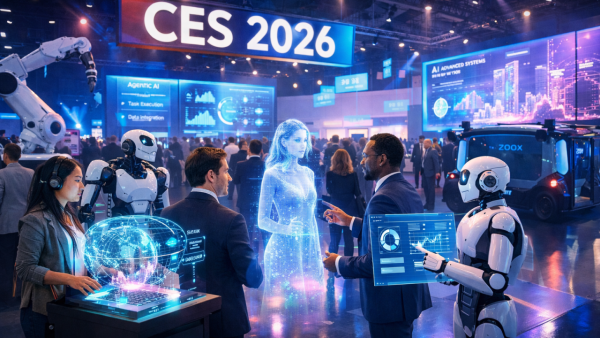
I want to start this edition by looking beyond the flashing lights of Las Vegas.
Every January, CES (Consumer Electronics Show) — the world's largest and most influential annual technology trade show — gives us a glimpse of the future. But, after more than three decades in project management, I’ve learned that not everything that shines really delivers value.
Many of the “next big things” come and go: some leave a lasting impact, others quietly fade away.
What I saw at CES 2026 made one thing very clear:
We have passed the point of experimentation.
If 2025 was the year AI became real, 2026 is the year AI becomes operational.
The conversation has shifted.
And Antonio Nieto-Rodriguez and I also confirmed in a global survey that the value of AI is no longer hypothetical. It is visible, measurable, and actionable.
It’s no longer about “what can this tool generate?” but about “how does this tool execute?” And that changes the way we think, decide, and act as project managers.
Early in my career, we spent most of our energy fighting for information. Data was scarce, and every report felt like a small victory.
Today, the challenge is the opposite: an abundance of information, tools, and possibilities — so many options that, without focus and discernment, it’s easy to feel overwhelmed and lose direction.
CES also showed me that this was not a show about individual products.
It was a signal of a deeper structural shift in how projects are conceived, delivered, and sustained over time. Again and again, I saw examples where technology didn’t replace what already worked — it expanded it.
One powerful symbol of this shift was LEGO. A company built on physical creativity, manual play, and timeless design presented smart bricks: connected blocks with sensors, software, and AI integration. LEGO didn’t abandon what made it great... It expanded the meaning of what a “brick” can be.
This is exactly what is happening in project management today.
It’s not about throwing away classical project practices. It’s about extending them with data, AI, and digital capabilities to create new forms of value.
But the biggest trend at CES wasn’t a flashy chatbot... It was the rise of Agentic AI.
Agentic AI refers to artificial intelligence systems that don’t just respond to questions or follow instructions, they take autonomous actions to achieve goals.
Unlike traditional AI that only outputs information or performs tasks when asked, agentic AI understands context across multiple devices and systems, makes decisions, and executes steps on its own.
Tools like Whizz and Motorola’s Qira are examples of these next-generation platforms. They act like autonomous project assistants, analyzing information across multiple systems, understanding the context of tasks and projects, and taking action automatically.
Whizz can monitor project schedules, track dependencies, identify risks, and even suggest or make adjustments to keep a project on track.
Qira connects calendars, emails, IoT devices ("Internet of Things" devices, such as smart sensors, connected machines, or office equipment), and collaboration tools to proactively manage workflows, notify stakeholders, and resolve fragmented data problems that usually slow teams down.
These tools are moving from being “answer machines” to autonomous collaborators, letting humans focus on judgment, strategy, and creating real value.
Yet this abundance of automation demands human judgment.
We are moving toward a reality where your “Project Coordinator” might be software, but the meaning-making remains yours.
AI executes, but humans provide purpose.
And this is the moment where project managers truly shine: understanding not just the tools, but the human and organizational dynamics that allow these tools to succeed.
Technology can accelerate execution, but leadership guides impact.
AI is also entering the physical world of projects faster than ever.
At CES 2026, I saw several innovations that illustrate this shift:
- The Samsung Galaxy Z TriFold, CES “Best in Show,” isn’t just a phone. It’s a foldable device that expands into a 10-inch workspace, showing how technology can change the way we work anywhere, anytime.
- Boston Dynamics’ Atlas is a humanoid robot moving onto factory floors, capable of performing tasks that were once manual and repetitive.
- Siemens’ digital twins are creating fully digital replicas of industrial plants, allowing teams to simulate, monitor, and optimize operations before touching the physical equipment.
Different industries, different technologies, but the same trend: the definition of “resource” is evolving.
Machines, software, and digital simulations are now part of the teams we lead, alongside human talent.
Soon, you will manage hybrid teams of humans and machines, and adopting these technologies isn’t just a tech choice... It’s a leadership challenge.
Another moment that truly impressed me at CES was Project AVA, a holographic presence combining advanced language models with physical interaction. This wasn’t just a digital interface responding to prompts; it felt like an entity you interact with.
It made me reflect on a future where AI avatars may act as senior advisors in projects — supporting analysis, coordination, and decision-making — while humans remain responsible for judgment, ethics, and direction.
From a project perspective, this is no longer about delivering a single product. It’s about building ecosystems where hardware, software, data governance, security, ethics, and user experience must work together seamlessly. If one element is out of sync, the entire experience collapses.
Projects are starting to resemble orchestras. A single instrument playing perfectly is not enough.
What matters is harmony — and the project manager becomes the conductor, aligning rhythm, tempo, and intent.
Perhaps the most important takeaway from CES isn’t the gadgets. It’s how these tools serve people.
I also saw a surge of Longevity Tech, tools designed to monitor and improve human health, such as the NuraLogix Mirror, which detects health risks in 30 seconds, and wearables that help manage stress.
After a year like 2025, filled with relentless deadlines, cost pressures, and demands for results, seeing technology pivot to protect and enhance the human asset — the energy, health, and well-being of people — is a sign of maturity in innovation.
Tools evolve quickly, but principles evolve slowly.
Projects remain human endeavors, shaped by relationships, trust, and values, and our role as leaders is to ensure technology amplifies human potential rather than replaces it.
If you want to hear more, I shared my reflections on CES in the 5 Minutes Podcast episode. In it, I explore how projects today extend beyond traditional foundations, integrating data, AI, and digital capabilities, and how project managers are becoming value orchestrators, connecting technology to meaningful impact for organizations and society.
As we start this new year, I keep returning to the same question I asked in our December newsletter: “What really matters?”
CES showed speed. It showed efficiency.
But speed without direction only gets you lost faster.
With AI agents managing schedules and robots handling execution, our role evolves toward ethics, strategy, and empathy.
AI isn’t here to replace project managers... it’s here to reshape what it means to be one.
This is the perfect time to reflect on what leadership truly means:
Helping your teams navigate complexity, making thoughtful decisions in real time, and creating value that lasts beyond project completion.
It’s about being intentional in how we design processes, collaborate with technology, and nurture human talent.
I hope you embrace these innovations not as threats, but as opportunities to grow in competence, intention, and awareness.
Use AI not just to work faster, but to work smarter and create real value.
What Has Been on My Radar Recently?
Meta’s Bold Bet on Autonomous AI Agents with the Manus Acquisition
One of the biggest stories in AI this year has been Meta’s acquisition of Manus, a company building advanced general‑purpose AI agents capable of autonomous task execution.
Manus has rapidly grown since its launch, processing over 147 trillion tokens and serving millions of users with deep research, automation, and task‑oriented capabilities — all the way from browser‑level execution to complex workflows.
Meta’s acquisition, valued at around $2 billion, marks one of its most significant strategic moves in AI, positioning the company to integrate agentic AI across its ecosystem, from Meta AI to consumer and business products.
What’s especially noteworthy is that Manus will continue operating independently while its technology scales to billions of users, underscoring the belief that autonomous agents are not just a concept but the next frontier in real‑world AI application.
From my perspective, this is a development that every project manager and tech leader should watch closely.
Autonomous agents like Manus are no longer a distant idea, they are becoming real collaborators, capable of executing complex tasks while humans focus on judgment, strategy, and creating meaningful outcomes.
This acquisition signals that the future of project execution will increasingly rely on AI agents as integral teammates, and staying ahead of this shift will be critical for anyone leading teams or projects in 2026 and beyond.
Claude Copilot’s Rise Highlights a More Competitive AI Ecosystem
Another major development on my radar is how Anthropic’s Claude AI is reshaping enterprise AI experiences, particularly through Microsoft 365 Copilot.
Starting in early 2026, Claude models such as Claude Sonnet 4 and Claude Opus 4.1 are being enabled by default as part of Microsoft’s Copilot ecosystem, governed under Microsoft’s data protection and enterprise compliance framework.
This shift means that Copilot users now have model choice at scale, moving beyond a single default provider and offering deeper reasoning, workflow automation, and agentic capabilities tailored for complex productivity tasks.
I think that this is a clear sign that the AI landscape is evolving faster than ever, and no single player — OpenAI included — can maintain a dominant position indefinitely.
With Claude now integrated into Microsoft 365, OpenAI is no longer the only option powering enterprise Copilot tools, which creates competitive pressure and accelerates innovation across the industry.
As project managers, we are entering an era where having access to multiple AI tools — and knowing how to orchestrate them effectively — becomes a real competitive advantage.
The arrival of Claude in Copilot is not just a technical upgrade, it signals a strategic shift toward ecosystems of AI, where adaptability, experimentation, and intelligent integration will separate successful teams from the rest.
The PMBOK® Guide 8th Edition is Now Available in Print
After many questions from readers over the past months about when the PMBOK® Guide 8th Edition would be available in physical form, the wait is finally over: the printed edition is now officially available.
As you know, over the past months I’ve also published several supporting resources to make this edition more practical and easier to apply.
I have created materials like the PMBOK Process Flow PDF, video walkthroughs, and visual canvas, all designed to help practitioners truly internalize and use the new performance domain–based approach.
And the process flow has already reached 10,000 downloads. It’s incredibly rewarding to see so many people using it to make sense of the new guide, and it motivates me to keep creating practical tools for the community.
You can download the process flow here.
The English step-by-step video is available:

And there’s a Portuguese version with multi-language subtitles at:

As always, these resources are meant to enhance your understanding.
They don’t replace reading the Guide itself, but they make applying it in the real world far more intuitive and accessible.
To everyone preparing for the PMP exam: good luck!
May these tools help you see the connections, understand the patterns, and apply the concepts with confidence in your projects.
Quick Announcements
Starting 2026 Together: Masterclass & Certification Promotions
As we start 2026, I’m really happy to share two learning initiatives that reflect where our profession is heading and what many of you have been asking for: practical ways to build confidence with AI in project management.
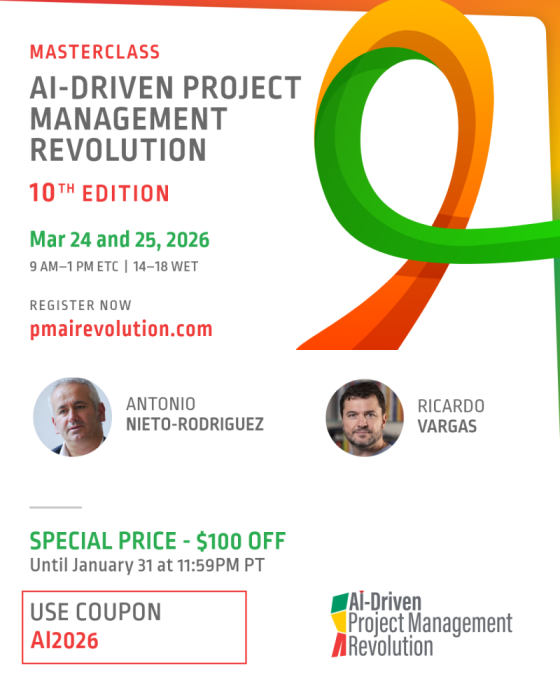
Together with Antonio Nieto-Rodriguez, I’ll be launching the first Masterclass of the year, marking the 10th edition of the AI-Driven Project Management Revolution Masterclass.
This is a very hands-on and practical experience focused on how AI is already changing the way we lead projects, programs, and portfolios. It’s not about hype or abstract theory. It’s about understanding what AI means for project managers today, how to apply it across the full project life cycle, and how to make better decisions using real tools, real cases, and plenty of interaction.
More than 500 professionals from 63 countries have already joined previous editions, and the diversity of perspectives is one of the strongest elements of the experience.
You can join the masterclass only (early price is USD 399), or choose the bundle (early price is USD 699) that includes the masterclass + the certification preparation + certification badge. You just need to use the code AI2026 (until January 31, 2026, 11:59 PM PT).
All the details are available here.
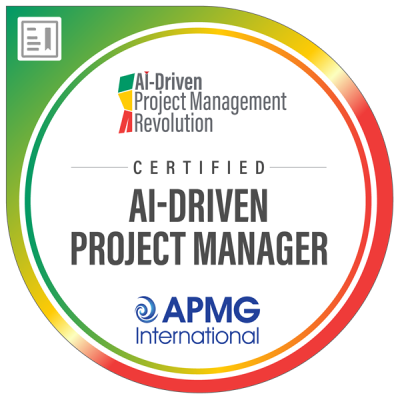
The AI-Driven Project Manager (AIPM) Certification was created to help professionals formally validate their ability to apply AI in real project environments.
Designed by practitioners, for practitioners, the certification focuses on practical decision-making, governance, and the responsible use of AI across projects, programs, portfolios, and PMOs (project management office). It helps bridge the gap between traditional project management practices and the realities of an AI-enabled workplace.
The certification was fully updated in 2025, with a new exam format and improved preparation materials to make studying clearer and more effective. The current price of the certification is USD 399, using the code AI2026, valid until January 31, 2026. You can know more here.
Whether you choose the masterclass, the certification, or both, the objective is the same: to help you move from awareness to real capability in a world where AI is no longer optional, but part of how projects succeed.
Get to know my LinkedIn Courses
For several years, I’ve been creating online courses on LinkedIn Learning to help professionals navigate project management, innovation, and AI with practical insights.
Many people ask me which courses are available and what they cover. So, to start 2026 well, I decided to bring them together here to make it easier for you to explore what’s most useful for your own learning journey.
- How to Keep Your Team on the Bleeding Edge of AI Innovation: A framework for leaders to build sustainable AI strategies that deliver real value by aligning people, processes, and technology.
Portuguese version, here.
- Revolutionizing Project Management with AI Agents: An introduction to AI agents (autonomous AI assistants) and how they can streamline tasks, boost efficiency, and support complex project activities.
English version, here.
Portuguese version, here.
- Leveraging Generative AI for Project Management: Practical guidance on integrating generative AI into project workflows, including planning, risk management, communication, and future trends.
English version, here.
Portuguese version, here.
中文 (Chinese) version, here.
- Project Management Foundations: A core course on project management basics, covering goal setting, planning, execution, and delivering results effectively.
Portuguese version, here.
- Sustainable Project Management: Strategies to boost social, economic, and environmental impact – how to integrate sustainability into project practices to achieve positive impact across people, planet, and profit dimensions.
English version, here.
Portuguese version, here.
I hope this collection makes it easier for you to find the right course, dive in, and apply what you learn in your own projects and teams.
Learning never stops, and together, we can make 2026 a year of growth, innovation, and meaningful impact.
Join Me at the O’Reilly GenAI Superstream
I’m excited to share that I’ll be participating in the O’Reilly GenAI Superstream on January 29, 2026, from 4 PM to 8 PM WET.
This event is all about moving beyond simple AI prompts to designing reusable, agent-driven workflows that enhance productivity, improve project execution, and create real impact across organizations.
You’ll hear from leading experts, including Wade Foster, Max Tkacz, Aydin Mirzaee, and Mark Kashef, and I’ll be opening and closing the event, sharing insights on how agentic AI workflows are reshaping project management and what it means for leaders in every industry.
If you want to explore practical ways to use autonomous AI agents in your work, join us for this interactive, hands-on virtual session.
Learn more and sign up here.
Your Voice Matters!
You can also read the previous issues here.
If you have any suggestions, comments, or anything else that will help me make it better, please send a note to [email protected]
Please feel free to share this newsletter with your friends, colleagues, and other people you may find will benefit from it.
They can also subscribe to receive it here.
Thanks for your support, and I hope it was helpful to you.
Cheers,
Ricardo Vargas