Issue #34 - Quem será o Gerente de Projetos Sênior de 2035?
Olá a todos!
Nesta edição, eu quero discutir uma questão que considero cada vez mais importante para o futuro do gerenciamento de projetos: quem estamos preparando para ser os líderes de 2035? A inteligência artificial está assumindo grande parte das tarefas que tradicionalmente serviam como porta de entrada para profissionais em início de carreira. O problema é que essas tarefas não eram apenas operacionais — elas também eram uma forma de aprendizado, exposição e construção gradual de julgamento.
Também reflito sobre o impacto dessa transformação na produtividade e no desenvolvimento das organizações. Se a IA torna o trabalho mais rápido, isso não significa necessariamente que estamos criando mais valor. Precisamos repensar como desenvolvemos pessoas, como transferimos experiência e como preparamos a próxima geração para tomar decisões em ambientes cada vez mais complexos.
Nesta edição, compartilho ainda uma ferramenta prática para decisões relacionadas à IA, novidades sobre a certificação AIPM e a disponibilidade do PMBOK® Guide 8th Edition Process Flow em seis idiomas. Mais do que discutir o que a IA pode automatizar, quero provocar uma pergunta: se a primeira etapa da carreira está desaparecendo, quem estamos formando para ocupar as posições de liderança do futuro?
Ricardo

In This Issue
- AI Is Replacing the Entry-Level Work
- Where Will Tomorrow’s Leaders Learn?
- Is AI Actually Making Companies More Productive?
- A Practical Toolkit for AI Project Decisions
- Summer Promotion for the AIPM Certification
- The PMBOK® Guide 8th Edition Flow Is Now Available in Six Languages
AI Is Replacing the Entry-Level Work
Last month I asked whether you would still have a job as a project manager in 2030. It became the most-read edition we have ever published, and replies were still arriving four weeks later. Thank you for that.
This month I want to ask the question that comes immediately after it, and that almost nobody in our profession is asking.
If artificial intelligence is absorbing the work we have always handed to beginners, where is the next generation of experienced project managers supposed to come from?
In the late 1990s, on my first serious project, I was essentially a human database.
I collected status. I typed and retyped schedules. I walked down corridors to ask people whether an activity had actually finished, because the answer they gave me on Monday was already wrong by Wednesday. I rebuilt the same report every Friday afternoon. I sat at the back of meetings I did not fully understand and took notes I followed even less.
It was tedious work. By any modern standard it was low value work. And it was the best professional education I have ever received.
Because while I was typing those schedules, something else was happening to me.
I was learning what an optimistic estimate sounds like when a supplier says it out loud. I was learning that the person who reports “almost done” three weeks in a row is not almost done. I was learning to tell a real dependency from an arrow somebody drew because the software wanted one there.
Nobody sat me down and taught me any of that. I absorbed it, slowly and badly, by doing work that a machine now finishes in four seconds.
The tasks we gave to beginners were never really about the tasks. They were the curriculum.
And there is a second thing, which matters even more. I was allowed to be wrong in a place where being wrong was cheap.
When I got a number wrong, someone senior caught it before it reached a client. When I asked a foolish question in a meeting, I found out why it was foolish, and the price of that lesson was my own embarrassment rather than a ten million dollar overrun.
That was not a job. That was an apprenticeship wearing the costume of a job.
For three years I have been telling audiences that AI taking administrative work out of project management is good news. I still believe that.
In Issue #33 I wrote that the project manager will not disappear but the administrative project manager will, and I stand behind every word of it.
What I did not think through carefully enough is who pays for the transition.
Look at the list of things AI now does well in our field.
Consolidating status. Updating schedules. Drafting reports. Summarizing meetings. Reconciling numbers across systems. Checking a document against a template. Chasing people for updates.
Now look at the job description of a junior project analyst in almost any organization on earth.
It is the same list.
And I saw some researchers giving this phenomenon a name I have not been able to get out of my head: seniority-biased technological change.
Earlier waves of automation hit the middle of the organization, or the routine end of manual work.
This one is hitting the bottom of the ladder, which happens to be the place where people used to climb on.
So... You might be asking yourself “What does this do to our profession?” Well, in my opinion:
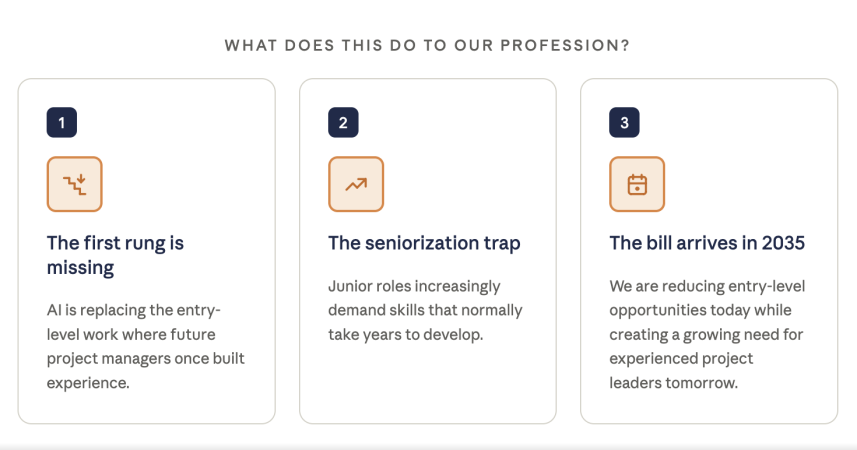
1. The first rung is missing
We did not remove the ladder. We removed the step that let you reach it.
The path into project management was never a course. It was a sequence:
You did the administrative work, you were exposed to real projects while the stakes for your mistakes were low, somebody noticed you were reliable, and you were handed something slightly harder.
Repeat for eight years and a project manager comes out the other end.
Take away the first stage and the sequence does not start. There is no obvious replacement for it, because the first stage was never designed. It was a by-product.
2. The seniorization trap
Junior roles are not vanishing quietly. Many of them are being rewritten.
Read the postings. Entry-level positions now ask for stakeholder management, business judgment, executive communication and the ability to challenge a plan. Those are senior competencies.
We have written job descriptions that nobody entry level can honestly satisfy, and then we complain that there is no talent in the market.
I do not think this is malice. It is what happens mechanically when AI absorbs the executable part of a role and the only thing left in the description is the part that requires experience.
3. The bill arrives in 2035
This is why almost nobody acts on it.
The saving is immediate, visible and easy to defend in a budget meeting. The cost is deferred, invisible, and lands on somebody else’s tenure.
You never miss a senior project manager who was not grown. You feel the absence in 2035, when you need one, and so does every other organization that made the identical decision in the identical year.
In Issue #33 I quoted PMI’s estimate that the world may need up to 30 million additional project professionals by 2035. Put the two things next to each other.
We are forecasting an enormous need for experienced project talent within a decade while quietly dismantling the machinery that produces experienced project talent today.
A talent shortage you can see coming for ten years and still walk into is not a shortage. It is a decision.
But let me argue against myself
I want to give the strongest counter-argument a fair hearing, because I find it genuinely persuasive.
It runs like this. The apprenticeship I described was inefficient and frequently humiliating. People spent five years doing clerical work to earn the right to think.
If AI removes the clerical work, why can a talented twenty-four-year-old not start at judgment? Give them the AI, give them real problems, and let them skip the typing.
I would like this to be true, and parts of it are. Some of what I learned in those years was pure waste, and I would not wish it on anyone.
But judgment is not information, and it is not something a classroom transfers.
Judgment is pattern recognition built out of consequence.
You develop a feel for schedule risk by watching a schedule you personally built come apart, and then having to explain it to someone whose money it was. You learn to read a room by misreading one and paying for it.
If AI builds the schedule, and AI flags the risk, and AI drafts the explanation, the young professional never owns the failure. An experience you do not own does not turn into judgment. It turns into a story you heard.
That is what worries me most, and I say it as someone who remains bullish on this technology.
We may be about to produce a generation that is extraordinarily productive and strangely inexperienced.
So this is what I would actually do
If you lead an organization or a PMO, I believe that this perspective can be useful:
- Count your juniors — Not your headcount. Your juniors. If you cannot say how many people under thirty joined your project function in the last two years, you are not managing this, you are discovering it.
- Separate the two reasons work exists — Some work exists because the output is needed. Some exists because doing it develops someone. AI should take the first category without discussion. The second category needs a deliberate decision, and sometimes the right answer is to keep a human doing something slower than a machine would.
- Give people decisions, not tasks — If the tasks are gone, the development has to come from somewhere else. Hand a junior a small decision with a real consequence, a genuine budget and a name attached to the outcome. Small and real beats large and hypothetical.
- Make the learning explicit — We used to get it as a by-product and never had to design it. Now it has to be designed: rotation, shadowing, decision reviews, structured post-mortems where the junior presents and defends.
- Put it in the risk register — If your organization depends on experienced project leadership and you have stopped producing it, that is a risk with a ten-year horizon and no mitigation in place. Most risk registers I see track supplier delays and currency exposure. Very few track the extinction of their own bench.
If you are already senior, as you know, mentoring used to be a generous extra. It has become part of the operating model.
The person who taught me the most was not paid to teach me, had nothing about it in his objectives, and probably never realized he was doing it.
He let me sit in on things I had no business attending and told me afterwards what had actually happened in the room.
We can no longer depend on that accident. It was a by-product of a working arrangement that no longer exists.
If you are senior in this profession and you cannot name the person you are deliberately bringing up behind you, that is the gap.
If you are early in your career, I suggest:
- Volunteer for the ambiguous work — The clean, well-specified tasks are exactly the ones going to AI. The messy ones, where nobody has written down what good looks like, are where you become valuable and where nothing can replace you yet.
- Own one thing end to end. Small is fine — Owning it is the point. Something where your name is attached to the result and there is no senior between you and the consequence.
- Ask for the failure — When something goes wrong, ask to be the one who investigates and presents it. Nobody enjoys this. It is the fastest learning available to you and almost nobody competes for it.
- Use AI as a colleague you argue with, not an oracle you obey — Make it produce the answer, then take it apart. Ask it what it assumed. Ask what would have to be true for it to be wrong. That habit is the difference between using AI and being replaced by it.
- Find the experienced person and make yourself useful to them — Apprenticeship is not dead. It has just stopped being automatic.
Let me be very clear
I do not think this story ends badly.
Our profession has survived several shocks similar to this one, and I have never once regretted betting on its ability to adapt.
But it will not fix itself, and I want to be blunt about why. The incentive to fix it belongs to whoever is leading in 2035. The cost of fixing it belongs to whoever is building a budget in 2026. Those are almost never the same person, and that is precisely the kind of problem our profession exists to solve.
Last month I asked whether you would still have a job as a project manager in 2030. This month my question is different, and I think it is harder.
Who are you training right now to take yours?
If the honest answer is nobody, that is not a statement about artificial intelligence. It is a statement about us.
And perhaps that is the bigger lesson here: we cannot prepare the next generation if we stop learning ourselves.
The way we lead projects is changing, and the PMBOK® Guide 8th Edition reflects many of those changes.
That is why I created Navigating the PMBOK® Guide 8th Edition: A Practical Guide for Project Leaders: to help project leaders make sense of the new edition and, more importantly, connect it to the reality of leading projects today.
And I extended the promotion to this course, which means that it is still $149 (instead of $249). That’s $100 off with code PMBOK8.
If you are wondering what these changes mean for you and the way you work, I believe you will find the course useful.
Explore the PMBOK® 8th Edition course →
What Has Been on My Radar Recently?
Where Will Tomorrow’s Leaders Learn?
Adobe Stock — Forbes
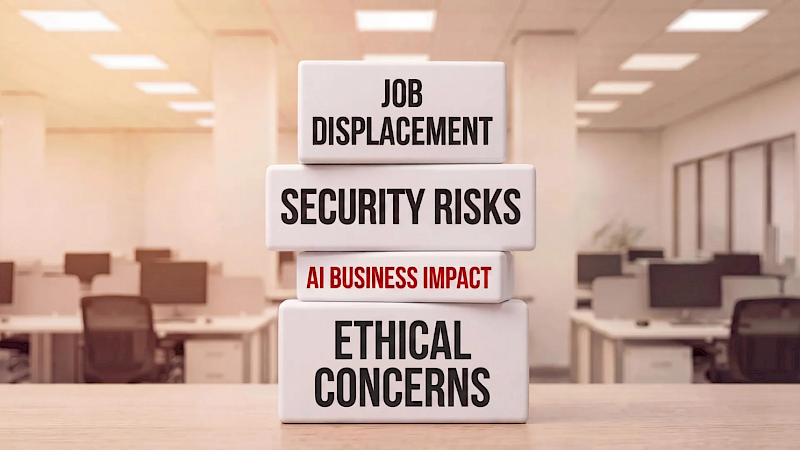
I came across a recent Forbes article “AI Could Wipe Out Entry-Level Jobs, And That Should Terrify Business Leaders” by Bernard Marr that connects closely with the question I explore in this edition.
The article points out that entry-level roles are likely to feel the impact of AI first because they often involve tasks such as drafting, research, analysis, coding support, reporting, and routine customer queries.
But the more interesting question is what happens next.
If companies reduce graduate schemes, trainee positions, and junior roles, where will young professionals develop the judgment, communication skills, and business context they need to become experienced leaders?
That is exactly the concern behind this month’s newsletter. AI may make organizations more efficient today while quietly making it harder to build the people they will need tomorrow.
For me, that is the part of the AI conversation we should be paying much more attention to.
Is AI Actually Making Companies More Productive?
Guney Yildiz — Forbes
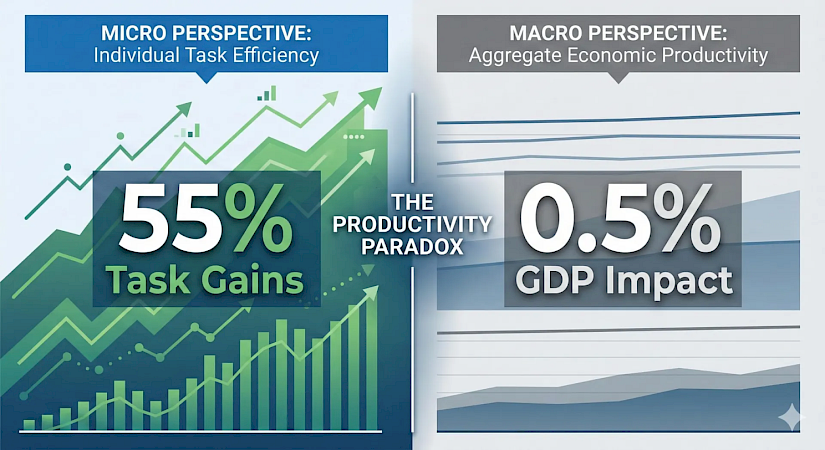
I came across another piece called “AI Productivity’s $4 Trillion Question: Hype, Hope, And Hard Data” that looks at something we do not talk about enough: the difference between making individual tasks faster and making an organization more productive.
AI can write, analyze, summarize, and produce work in a fraction of the time it used to take. But the benefits at task level do not automatically translate into better performance at organizational level. Processes, approvals, decision-making, and old ways of working can remain exactly the same.
That gap is becoming increasingly important.
If we simply use AI to produce more work without changing how decisions are made, how teams operate, or where time is actually being lost, we may end up measuring productivity by how much more we can produce rather than by how much more value we create.
For me, that is an important reminder that technology can accelerate the work, but only people can rethink the way the work gets done.
Quick Announcements
A Practical Toolkit for AI Project Decisions
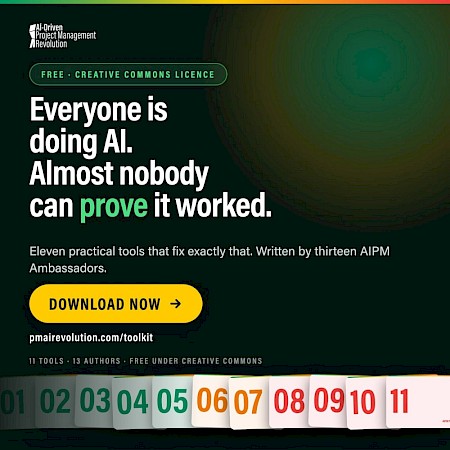
The AI-Driven Project Management Revolution community has just released its first product: the AIPM Toolkit.
It brings together eleven practical tools designed to help project leaders make better decisions around AI initiatives. From testing the business case and assessing readiness to understanding costs, defining accountability, and deciding when to continue, adjust, pause, or stop.
And the best part: it is completely free and available under a Creative Commons license, so you can adapt it, share it, and use it freely.
This is exactly the kind of practical resource we need as AI moves from experimentation into real projects.
I am very proud of the community behind it and grateful to everyone who contributed their time and expertise to make it happen. ❤️
I hope you find it useful, and that it helps more project professionals navigate AI with confidence and, most importantly, make sure nobody is left behind.
Summer Promotion for the AIPM Certification
AI is changing the way we manage projects, but knowing how to use the technology is only part of the challenge.
We also need to understand how to apply it responsibly, how to make good decisions around AI initiatives, and how to lead projects in an environment where the technology is changing so quickly.
If you have been considering the AIPM certification, we have a summer offer that may make this a good time to take the next step.
Until 30 August 2026 at 11:59 PM PT, the full certification package is available for $399 instead of $499.
The package includes the complete preparation material, the recording of the latest AIPM Masterclass, and your exam voucher. So you have the resources to prepare, learn from the latest content, and take the certification exam.
Whether you are already working with AI in your projects or are just beginning to explore what AI means for project management, the certification is designed to help you build a stronger foundation and bring more confidence to the work you are doing.
If becoming AIPM-certified has been on your list, summer might be the right time to make it happen. Use code SUMMER at checkout.
The PMBOK® Guide 8th Edition Flow Is Now Available in Six Languages
One of the resources I have been most excited to see grow is the PMBOK® Guide 8th Edition Processes Flow.
What started as a way to make the new edition easier to understand and visualize is now available in English, Portuguese, Chinese, Spanish, French, and German.
The goal has always been to make the 40 processes easier to see as a connected system rather than something you simply memorize.
When you can see how the processes relate to each other, the structure of the guide becomes much more practical and much easier to apply to real projects.
I’m particularly happy that we can now make the flow available to a much broader project management community.
Language should not be a barrier to understanding how the PMBOK® Guide 8th Edition comes together.
You can find the different language versions, including the Full and Simplified flows, here.