Issue #35 - You Cannot Think Outside the Box from Inside Your Bubble
Hey everyone!
In this issue, I want to talk about something I have been deliberately seeking in recent years: stepping outside my own bubble. It is one of the reasons I keep going back to Burning Man. More than an experience in the desert, it puts me in situations, surrounded by people and ideas that challenge my patterns and force me to see the world differently. And I believe this has a direct connection to the future of Project Management.
As AI takes over more and more of the operational work, judgment, adaptability, relationships, and the ability to see new connections become even more important. But we cannot think differently if we continue receiving exactly the same inputs. We need to find ways to step outside our comfort zones and question the things we take for granted.
In this issue, I also share some reflections on the speed of new AI model releases, what a potential breakthrough on the Navier–Stokes problem could mean, and different approaches to leadership in projects. I also bring updates on our next AIPM Masterclass and a special update on our scholarship program.
Ricardo
In This Issue
- Why I Keep Going Back to the Dust
- Every Other Week, One New AI Frontier Model is Released
- AI cracked the Navier–Stokes challenge. What does that mean for physics?
- Servant Leadership x Traditional Leadership
- Our Latest AIPM Masterclass of 2026 Happens in October
- 240 Students, 59 Countries: An Update on Our Scholarship Program
Why I keep going back to Burning Man, and what it has to do with the future of Project Management
Every September, someone asks me the same question. Sometimes with curiosity. Sometimes with a look that says they are a little worried about me.
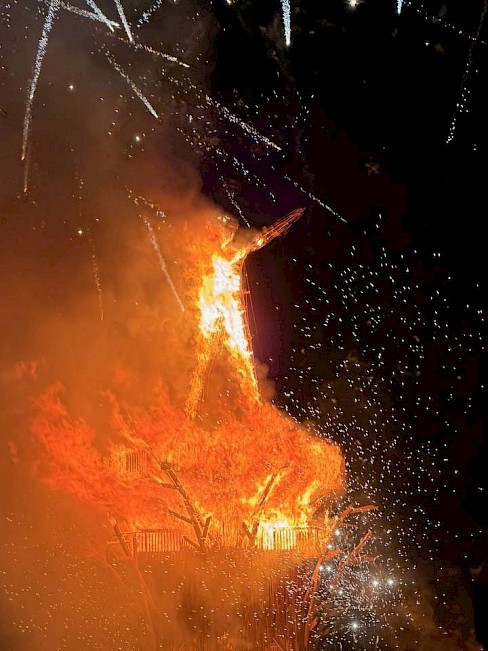
The burning of the Man on Saturday, September 5, 2026 (personal files)
The city runs on ten principles. A few of them explain almost everything: radical self-reliance (you bring what you need to survive), gifting (you give without expecting anything back), decommodification (almost nothing is for sale), and leaving no trace.
Everybody who goes is looking for something.
Some go for the art. Some go for the music. Some go to celebrate, some to grieve, some to find themselves, some just to say they went.
I go to be challenged.
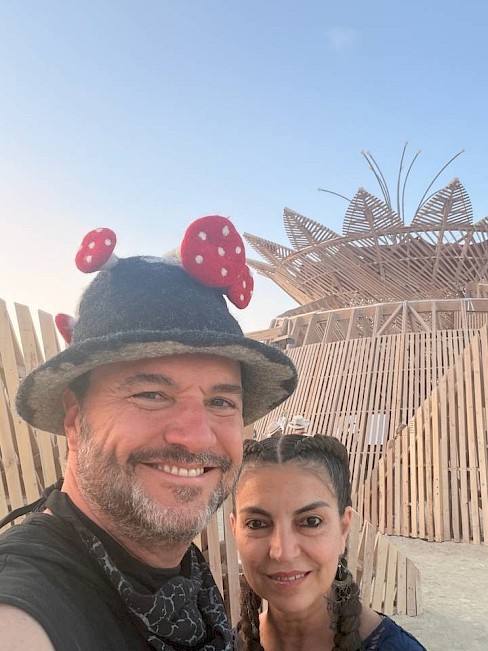
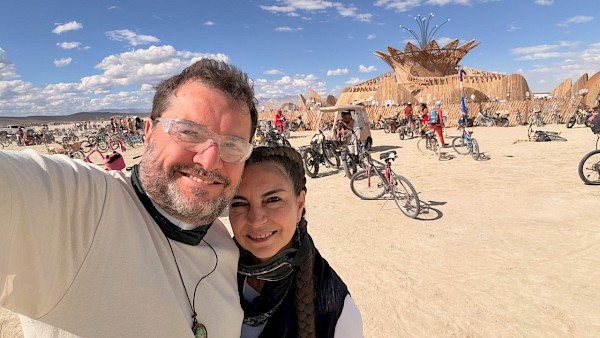
Zélia and me in front of the 2026 Temple on the playa
Let me be concrete about what "challenge" means there.
You bring all your food and all your water. You are dirty and covered in dust almost 24 hours a day. The weather does whatever it wants: hot, cold, wind, dust storms, and, as I learned in 2023, even rain. There is no store to run to when something breaks.
And things break. Your bike gets a flat tire. A zipper stops working. This year, the battery of my wife Zélia's e-bike simply stopped recharging. In normal life, that is a phone call and a delivery (by the way, there is no phone connection there).
In the desert, it is a problem you solve with what you have, or with the help of a stranger who becomes your best friend as time passes.
Burners have a saying for this: "the playa provides." It sounds mystical. In practice, it means that when you do not have what you need, someone nearby usually does, and they give it to you.
Every one of these small problems is a drill. It trains the one muscle I believe matters most today: the ability to adapt.
I do not go to Burning Man to rest. I go to be uncomfortable on purpose.
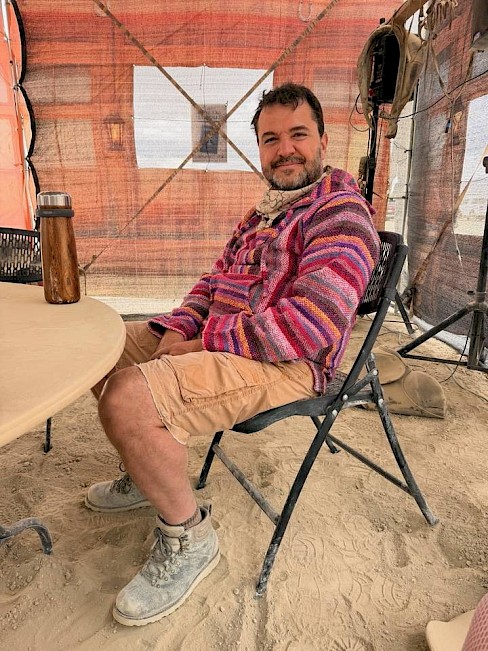
Dust on the boots, dust on the chairs, dust on everything. After a few days, you stop fighting it
Why would a project manager care about any of this?
Because of a question I keep asking in my talks, and that I explored in last month’s edition of this newsletter: where will the value of our work come from in the future?
In the last two editions, I wrote about AI taking over the operational load of project management. The status reports. The schedule updates. The meeting minutes. The consolidation of numbers across systems. A lot of what used to fill our week is being done by machines, and faster than most of us expected.
So what is left?
My answer is judgment, relationships, and the ability to see what others do not see. To connect ideas that do not seem connected.
To think outside the box.
And here is the uncomfortable part. You cannot think outside the box while doing exactly the same things, with exactly the same people, in exactly the same places, every single week. Your brain does not create new ideas from repeated inputs.
It just recycles old ones.
Paraphrasing the novelist Rita Mae Brown: “Insanity is doing the same thing over and over and expecting a different result.”
If AI takes the routine, the only thing it leaves us is the ability to think differently. And nobody learns to think differently by living the same week 52 times a year.
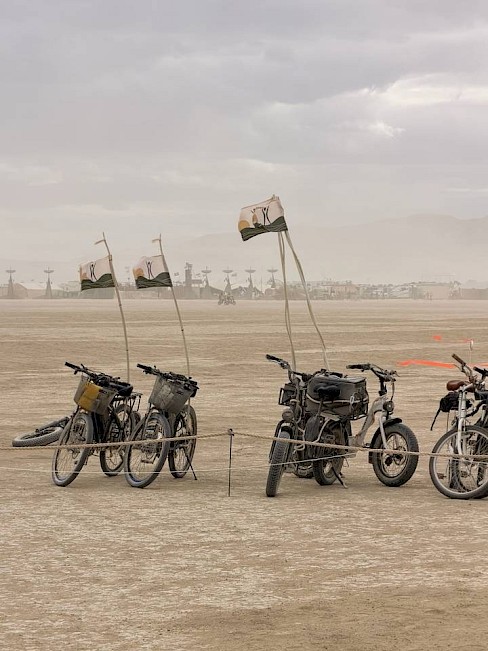
Our bikes parked on the open playa as the dust rises
We all know the 80/20 rule. In my view, our lives are drifting toward something closer to 90/10.
We go to the same restaurants and order the same food. We spend time with people who think more or less like us, work in similar jobs, and read the same news. We travel, but often to places that feel like home with better weather. Little by little, the world we actually experience gets smaller, even as the world outside gets more complex.
That is the bubble. And the problem with a bubble is that, from the inside, it feels like the whole world.
At Burning Man, the bubble breaks. In normal life, I would probably never meet a clown from Cirque du Soleil. I would never become close friends with people who live as nomads, who do not feel the need to settle in one place, and who see work, home, and success in a completely different way from me. There, these people are my neighbors, and we talk for hours about things that have nothing to do with KPIs, money, or success.
Over time, those conversations change how I think. They make me ask which of my beliefs are really mine, and which ones I just inherited from my bubble.
The riskiest assumption in any project is the one nobody questions. The same goes for life.
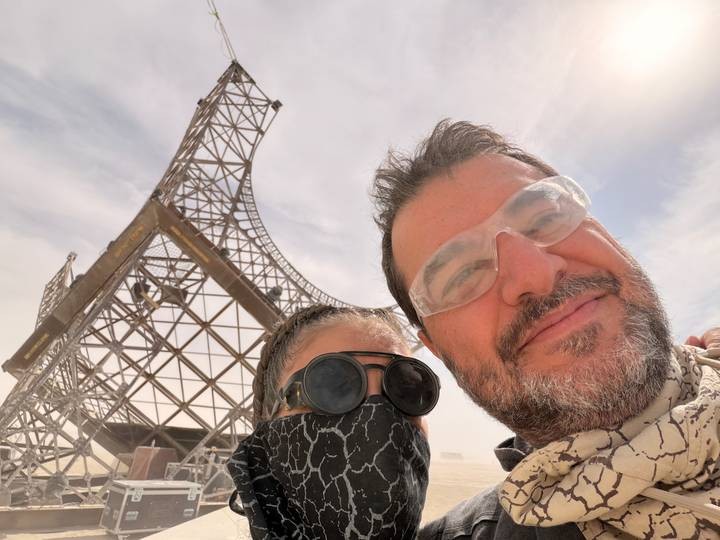
Philippe Maindron’s “Eiffela Broken Dream”, an artwork that displays a broken Eiffel Tower on the playa. Goggles and masks are not a fashion choice. They are survival gear
There is one more thing I look for, and it is the one that fascinates me most as a project manager.
Think about it. You put around 80,000 people in the middle of a desert. The conditions are extreme. Resources are scarce. There is no money involved. And the city works.
It is not anarchy. There is a street plan, there are volunteers, there are rules. But most of what makes the city function is not imposed from the top. It is agreed. People organize themselves around shared principles. Camps take care of each other. Strangers help strangers. Giving is the default, not the exception.
I am not naive about it. It is one week, not a permanent society, and it depends on months of preparation and a lot of people doing invisible work. But every year it shows me something that our organizations often forget.
We spend enormous energy designing control: approvals, reports, sign-offs, escalation paths. Some of that is necessary. But when the purpose is clear, the principles are shared, and people feel responsible for the whole, a surprising amount of order appears without anyone commanding it.
Chaos is not what happens when you remove control. Chaos is what happens when you remove shared purpose.
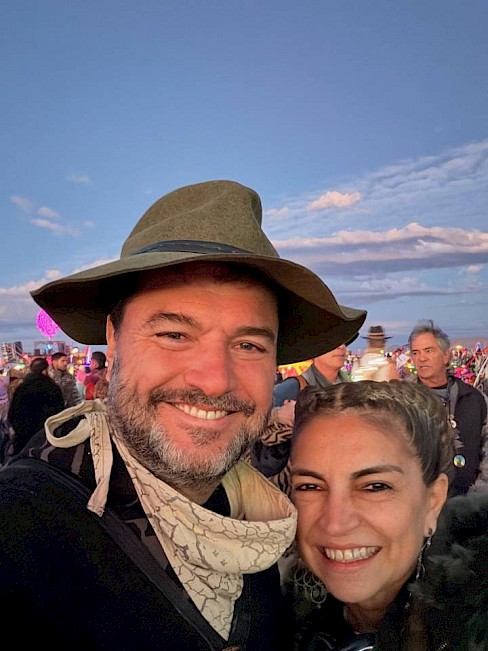
Waiting for the night with thousands of other Burners
If you read my 2023 edition, you met a man in panic, standing in the mud and thinking: "Why did I do this? How do I get out of here?"
That man has not disappeared. I still like my things organized. I still do not like sand.
What changed is the reason I go.
The first time, it was an adventure. A break from the routine, an experiment with the new.
Now it is a practice. Once a year, I choose to spend a week in a place where most of my experience does not help me, where my plans will break at some point, and where my titles and credentials mean nothing to anyone.
I go back every year for the same reason an athlete goes back to training. Not because they are not in shape, but because the shape does not last if you stop.
Adaptability is not a trait you have. It is a capacity you maintain, or lose.
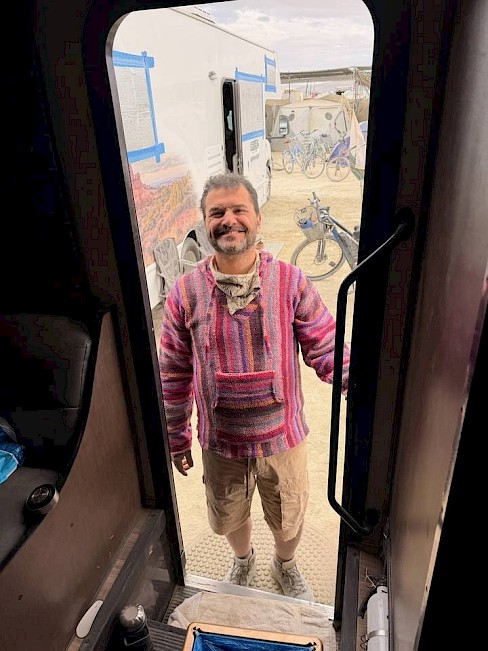
Back at camp, covered in dust and still smiling
Let me be clear. I am not saying you need to go to Burning Man. For many people, it would be a terrible idea, and that is fine. The desert is my way. It does not have to be yours.
But the world is changing much faster than our ability to adapt, and I do not believe anyone can keep up by staying in the same place. So this is what I would suggest:
- Schedule discomfort on purpose. Once a year, put yourself in a place where your experience does not work. A new country, a new language, a volunteer project, a course far from your field. Put it in the calendar like any other important commitment, or it will never happen.
- Audit your bubble. Look at the last ten people you had a real conversation with. How many think very differently from you? If the answer is zero, you are not getting information. You are getting confirmation.
- Practice with fewer resources. Any project looks good with unlimited budget and time. Try to deliver something small with half of what you think you need. You will learn what really matters.
- Ask for help, and give it. "The playa provides" only works because people give. In projects, the people who ask for help early and offer help freely are the ones who get through the storm.
- Revisit one belief a year. Pick something you are sure about in your work, and actively look for the best argument against it. Sometimes you will keep your belief. Sometimes you will not. Both outcomes make you better.
In the age of AI, the project manager who wins is not the one who knows the most. It is the one who can still see the world with fresh eyes.
You do not need a desert. You need a place where your certainty stops working. Find yours before change finds you.
The Man burns. Everything we build that week is temporary, and maybe that is the lesson
PS: If you want to see more photos from this year, follow me on Instagram, where I share more spontaneous content, especially on my Stories.
What Has Been on My Radar Recently?
Every Other Week, One New AI Frontier Model is Released
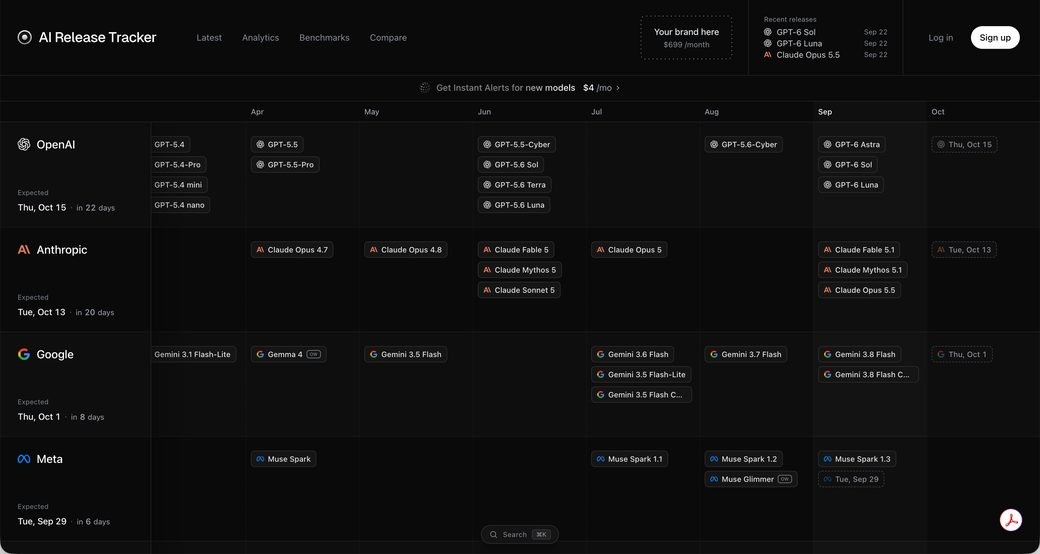
Are you curious about keeping up with the insane speed of new releases of AI frontier models?
Take a look at the AI Release Tracker, and you will notice my title isn't even correct. Maybe every other week is too long for how fast things are moving.
Recently, Skynews just published this video:
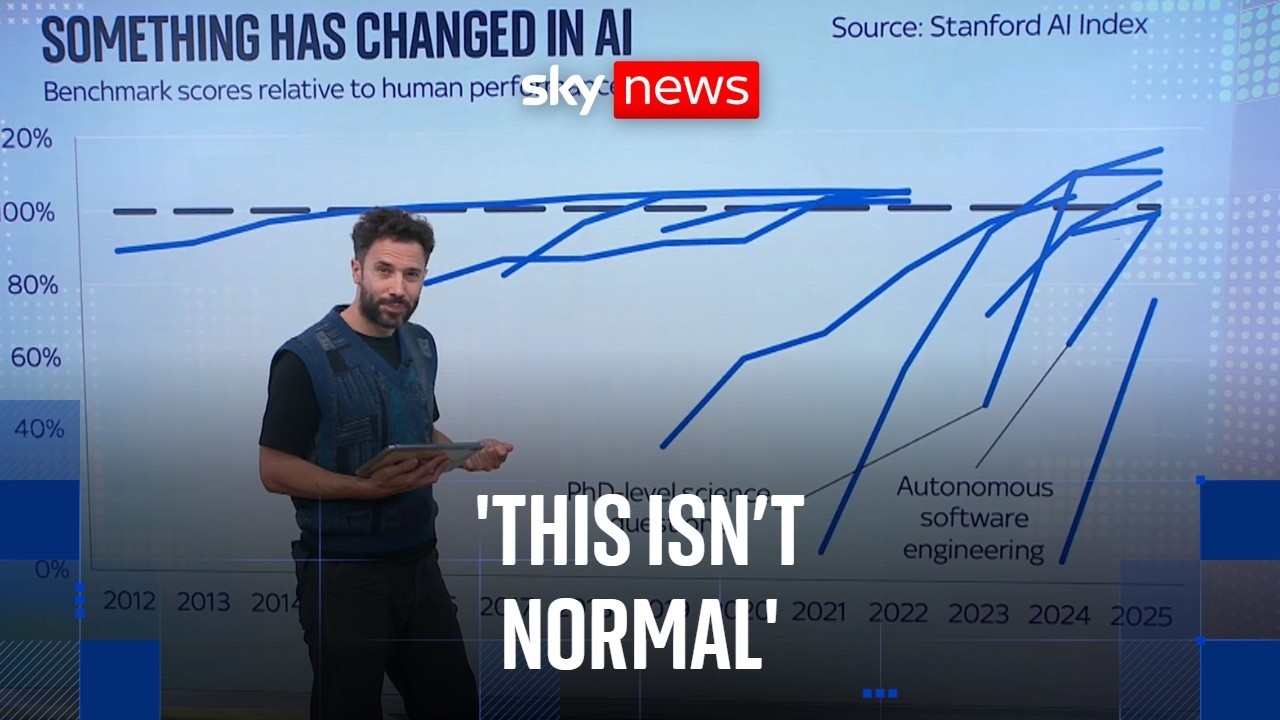
New models, updates, and increasingly capable systems seem to be announced almost constantly, making it surprisingly difficult to keep track of what is actually new. The AI Release Tracker is a simple way to get a sense of just how quickly the landscape is changing — and how crowded the frontier has become.
Check here.
AI cracked the Navier–Stokes challenge. What does that mean for physics?
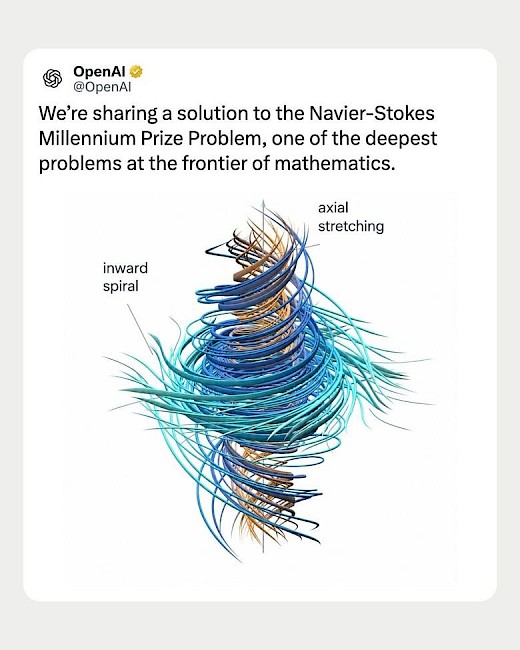
A few weeks ago, OpenAI announced that its most advanced AI model had solved one of the Millennium Prize Problems. These are a small group of famously hard math problems, and each one comes with a US$1 million prize.
The problem involves the Navier–Stokes equations, the nineteenth-century formulas that describe how fluids flow. I spent many hours with these equations as a chemical engineering student, so this one caught my attention. The AI proved that in some cases the equations produce a "singularity". In other words, they predict infinite speeds for liquids or gases, which is physically impossible.
The debate started right away. How good is AI really getting at math? Is it learning from unpublished work by other researchers? And who deserves the credit?
These are important questions. But I am more interested in a different one: what happens to the field itself? When a machine answers a question that people have studied for more than a century, the people who study fluids have to decide what their work is now about.
I believe every profession will face this moment sooner or later, and project management is no exception.
Read more in this article from Nature.
Servant Leadership x Traditional Leadership
Strong project management isn’t about controlling every detail. It’s about creating the conditions for your team to succeed.
I recently shared a post on LinkedIn exploring the difference between traditional leadership and servant leadership in project management. And how the role of a project leader is often less about managing every task and more about enabling people to do their best work.
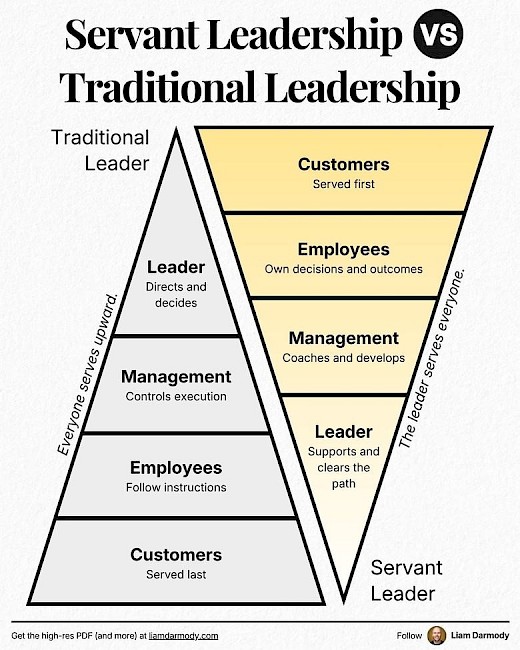
The best project leaders don’t just manage tasks.
They enable people to do their best work.
Quick Announcements
Our Latest AIPM Masterclass of 2026 Happens in October
Do not miss the opportunity to learn and interact with professionals around the world about what is happening in artificial intelligence applied to projects. The twelfth edition of the AI-Driven Masterclass will happen on October 13 and 14.
Use the code FABLE to get a US$150.00 discount on our next edition, including the AIPM certification preparation material and exam voucher.
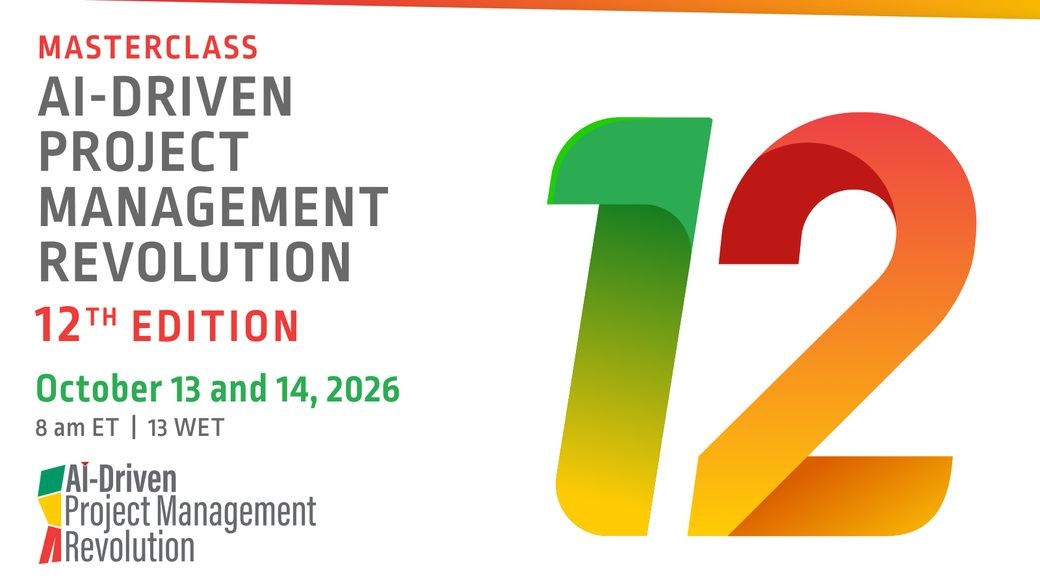
Register on the Masterclass, here.
240 Students, 59 Countries: An Update on Our Scholarship Program
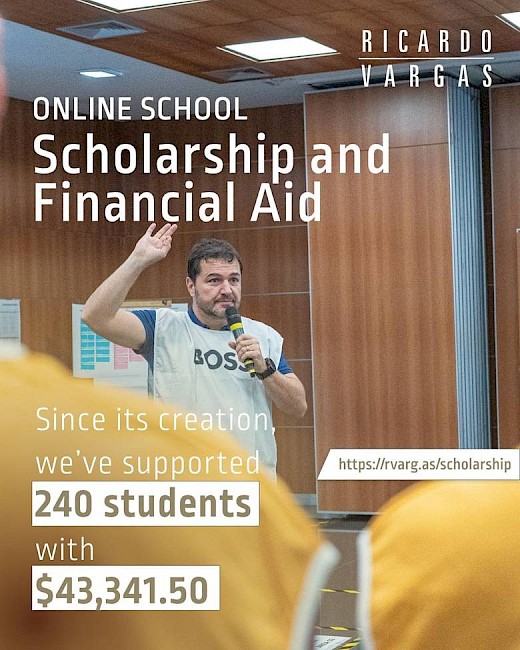
I have an update to share that means a lot to me. Our scholarship program has now supported 240 students from 59 countries, with more than $43,000 in scholarships granted so far. Of those students, 66 are women and 174 are men.
I want to be clear about one thing: these scholarships are not a personal gift from me. They exist because of every student who enrolls in our online school, participates in the AI-Driven Project Management Masterclass and other activities. A significant part of my course revenue goes directly to funding them. So when you join one of our programs, you are also helping someone, somewhere in the world, keep learning.
Applications are always open.
If you are a qualified candidate, you can apply here. The evaluation committee only reviews complete applications, so please fill in everything before you submit.
Thank you, from the bottom of my heart, to everyone who makes this possible.