Episode transcript The transcript is generated automatically by Podscribe, Sonix, Otter and other electronic transcription services.
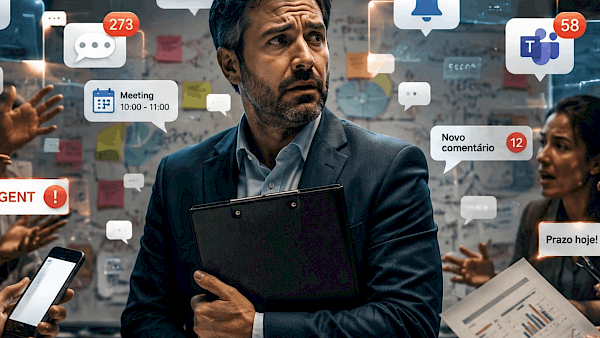
Hi everyone, here is Ricardo Vargas, and this is the 5 Minutes Podcast. I would like to start with a simple question. If I look at your calendar from last week, would I find project management activities or would I find an endless sequence of meetings, messages, emails, and fires to put out? I have been talking with professionals from many companies, different countries, and different sectors, and I keep hearing the same feeling. Everyone is incredibly busy. And I include myself in this. Everyone is working hard, but very few people can honestly say they are spending the day actually managing their projects. The day starts by answering messages. Before the first cup of coffee, there is already something urgent waiting. Then comes a meeting to prepare for another meeting, a call to explain a delay, another one to answer questions, then another meeting to realign priorities that will probably change again tomorrow. And at the end of the day, there is that strange feeling that you work it for 12 hours but accomplish very little that truly moves the needle of your project forward. That makes me wonder, have many of us stopped managing projects, and we started managing anxiety instead? Because those are two very different things. Managing projects means reducing uncertainty. Managing anxiety means constantly reacting to uncertainty. And those are not the same job. When everything becomes urgent, nothing is truly important anymore. When every message requires an immediate response, nobody has enough time to think. And thinking is so critical. When the schedule changes every day, it stops being a management tool and simply becomes a snapshot of the chaotic situation of the mess and the confusion you are in. Many project managers, they end up taking on a role that they were never supposed to have. They become a help desk, a translator of problems, a shock absorber. for the organizational anxiety. They spend the day calming people down, explaining decisions, and trying to synchronize expectations that keep changing. And that's very different from leading projects. And AI has created a super interesting paradox. It has eliminated A tremendous amount of operational work. Today, we can create documents faster. We analyze data in seconds. We prepare presentations at lightning speed. And look, that is amazing. That is fantastic. But it has also created dangerous expectations. If everything can be done faster, then everything should happen immediately. People now expect instant answers, instant changes, instant software, instant results, instant reports. Technology has reduced the operational effort. I agree completely with that. But in many organizations, it has also increased collective anxiety. And that is exactly why I believe the role of the project manager has become even more important. Not to make the chaos, the chaotic situation to move faster, but to bring predictability back into the project. A project manager is not there to absorb anxiety. A project manager is there to reduce uncertainty. That means saying no when necessary, protecting the team from false urgency, creating a sustainable pace, making decisions, providing clarity, and building confidence in the work. In the end, a good project meeting should leave people feeling calmer than when they walk at... Building confidence. In the end, a good project meeting should leave people feeling calmer than when they walk into the room. If they leave feeling even more anxious, perhaps we are managing emotions instead of managing projects. So let me leave you with a simple question. At your next project meeting, ask yourself and your team, “Are we really managing this project? Or are we simply managing the society that we created ourselves? Let's think about that. I hope you enjoyed this episode, and see you next week with another 5 Minutes podcast with much less anxiety. See you there.